

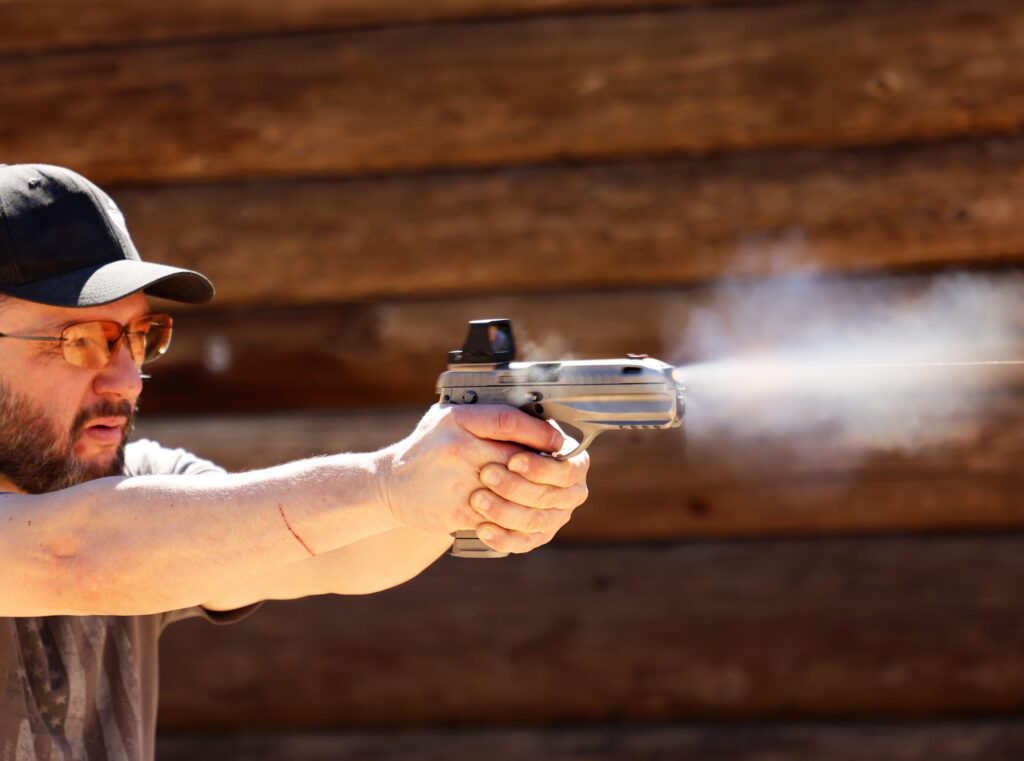
Eric Grauffel’s latest clinic at EAGLE isn’t just another stop on the competition circuit—it’s a masterclass in how elite-level performance can trickle down to everyday carriers and home defenders. The nine-time IPSC world champion’s emphasis on economy of motion, grip pressure that stays consistent through reloads, and the deliberate “pre-ignition push” he teaches aren’t abstract competition tricks; they translate directly to the split-second decisions a concealed-carry holder might face when a threat appears at seven yards. By breaking down his stage plans into repeatable micro-skills rather than flashy showmanship, Grauffel quietly dismantles the myth that practical shooting is only for gamers—his methods reward the shooter who trains with purpose, not just volume.
What makes this lesson especially relevant to the 2A community is the way it reframes competition as a laboratory for self-defense doctrine. When Grauffel stresses that every draw stroke must end with the same index and trigger prep regardless of whether you’re on a timer or facing an unknown threat, he’s reinforcing the legal and moral imperative of “reasonable fear” with measurable, repeatable mechanics. That kind of data-driven mindset pushes back against the narrative that armed citizens are reckless; instead, it positions serious training as the responsible extension of the right to keep and bear arms. The fact that a Frenchman has become the global standard-bearer for American-style practical pistol only underscores how ideas travel faster than borders—something the anti-2A crowd conveniently ignores when they claim our culture of armed self-reliance is uniquely dangerous.
For the average gun owner, the takeaway is both empowering and sobering: the same techniques that win world titles can shave critical fractions of a second off a defensive draw, but only if the shooter commits to deliberate, measured practice instead of hoping range time alone will suffice. Grauffel’s clinic reminds us that rights are preserved not just by legislation, but by the demonstrated competence of those who exercise them. In an era when training is increasingly scrutinized, the best defense of the Second Amendment may simply be shooters who can articulate—and execute—why their skills matter.


