

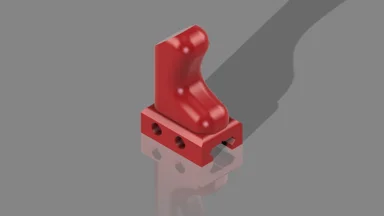
The Vibed Picatinny Foregrip is a perfect snapshot of how the modern 2A community has turned the garage printer into a genuine force multiplier. What started as a casual CAD session set to music has already produced a functional, hardware-store-compatible accessory that slots straight onto any Picatinny rail with two M5 bolts and matching nuts. That simplicity is the point: no exotic fasteners, no proprietary hardware, just a design that anyone with a $200 printer and a bag of metric screws can replicate in an afternoon. In an era when big-box retailers still treat vertical foregrips like exotic accessories, this file quietly democratizes the feature set that once required a $60–$90 purchase.
Beyond the hardware, the release itself is a microcosm of the cultural shift underway. The creator didn’t wait for a manufacturer’s blessing or a trade-show debut; they shared the STL, the print orientation, and the exact bill of materials in a single post. That open-source reflex—once the province of software—now extends to the physical interface between shooter and firearm. It also underscores why magazine bans and feature restrictions keep running into practical headwinds: the tooling to circumvent them is already sitting on kitchen tables. Regulators can ban a product line, but they can’t ban the coordinate system that lets an end-user extrude the same geometry at home.
For Second Amendment advocates, the deeper implication is cultural as much as technical. Every new file that hits a printer bed is another data point proving that proficiency with a firearm is no longer gated behind commercial inventory. The foregrip may be simple, but the precedent is powerful: if the community can design, share, and iterate on something as mundane as an angled hand-stop, it can do the same for more complex ergonomic or adaptive devices. That iterative loop—print, test, tweak, repost—keeps the rights conversation rooted in capability rather than permission, and it’s exactly why the grassroots gunsmithing scene continues to outpace legislative attempts to slow it down.


