

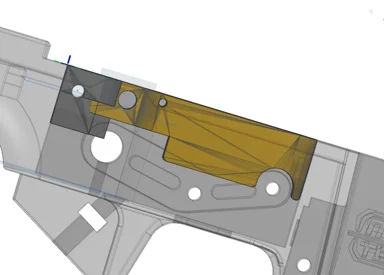
The UMP v0.1 release is more than a technical milestone—it’s a quiet declaration that the same open-source ethos that built the internet is now being applied to the very tools the Second Amendment protects. By labeling the files “project alpha” and warning users to “use at one’s own risk,” the creators are signaling both transparency and a deliberate hands-off posture: they’re not selling a product, they’re publishing information. That distinction matters in a legal environment where the line between speech and regulated manufacture is still being litigated in cases like Defense Distributed v. Grewal. For the 2A community, the takeaway is straightforward: if code is speech, then the ability to discuss, share, and iterate on firearm-related designs is itself an exercise of constitutional rights, not a loophole to be closed.
What makes this drop especially interesting is its timing and minimalism. Rather than a polished commercial offering, v0.1 arrives as raw files—an invitation for the community to stress-test, improve, and, crucially, document the process in public. That public record becomes evidence that decentralized, non-commercial collaboration can produce functional technology without a corporate intermediary, undercutting arguments that only licensed manufacturers can be trusted with such knowledge. It also forces regulators to confront a practical reality: once the files exist, perfect enforcement is impossible without measures that would chill protected speech across the entire internet. The prudent response from gun owners is therefore not celebration or reckless replication, but disciplined, lawful engagement—testing designs where legal, sharing data responsibly, and preparing to defend the principle that information about arms is not contraband.
Longer term, projects like UMP v0.1 accelerate a shift already visible in 3D-printed receivers, privately made firearms, and modular designs: the means of production are diffusing faster than the regulatory state can adapt. That diffusion doesn’t inherently increase risk; it increases individual responsibility. The community that treats this moment as an opportunity to demonstrate safe, legal, and innovative uses of new tools will strengthen the case that an armed populace can also be a careful and informed one. In that sense, the real test of v0.1 won’t be whether the files compile or cycle reliably—it will be whether the culture around them matures as quickly as the technology itself.


