

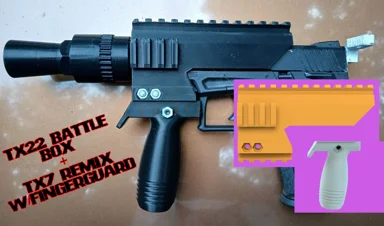
The TX22 Battlebox represents a fascinating evolution in the 3D-printed firearms ecosystem, transforming what began as a simple concept into a robust, user-configurable platform that speaks directly to the growing demand for modular, legally accessible firearm accessories. By taking DonRaczek’s original design and reinforcing it with M5 hardware for an EXTRA TIGHT fit, this iteration demonstrates how the maker community continuously iterates on open-source designs to address real-world durability concerns that plague early 3D-printed components. The inclusion of a remixed TX7 grip that sits flush with the shroud shows thoughtful attention to ergonomics and aesthetics—details that matter when enthusiasts are building functional firearms rather than just prototypes.
What makes this particularly noteworthy for the 2A community is how it exemplifies the democratization of firearm customization that 3D printing enables. Rather than being locked into manufacturer specifications or paying premium prices for aftermarket parts, individuals can now download, modify, and print components tailored to their specific needs using nothing more than a printer and a couple of common fasteners. The Battlebox’s minimal hardware requirements—two M5 screws and nuts—underscore how accessible these builds have become, lowering barriers to entry while maintaining the structural integrity necessary for practical use. This represents a shift from passive consumption of firearms products to active participation in their design and refinement.
The broader implications extend beyond individual builds to the ongoing conversation about rights, innovation, and self-reliance within the firearms community. As platforms like this proliferate, they challenge traditional gatekeepers in the industry while simultaneously creating new questions about quality control, standardization, and the balance between open-source collaboration and proprietary development. For pro-2A advocates, the TX22 Battlebox serves as both a practical tool and a statement: the tools of customization are increasingly in the hands of the end user, reinforcing the principle that the right to keep and bear arms includes the right to understand, modify, and improve the tools of that right.


