

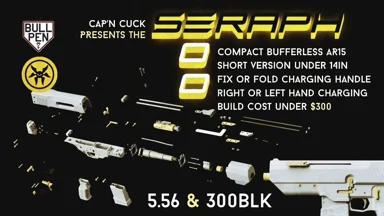
isn’t just another 3D-printed AR-15 pistol—it’s a deliberate middle finger to the ATF’s ever-expanding definition of what constitutes a “firearm.” By ditching the buffer tube entirely, its creators have sidestepped the legal gray zone that has long plagued pistol-braced builds, while still delivering a compact, shoulderable platform that prints on consumer-grade machines. That bufferless architecture isn’t merely a mechanical trick; it’s a philosophical statement that the Second Amendment community can—and will—innovate faster than regulators can draft new rules.
What makes the Seraph especially potent is its DIY ethos. Every part that matters can be produced on printers already sitting in garages across the country, turning what used to be a niche hobby into a distributed manufacturing network the government can’t simply subpoena or shutter. The decision to tag the release “notthegatalog” is a wink at the community’s growing fatigue with centralized repositories and the legal risks they attract; instead, files are scattered, mirrored, and version-controlled by users themselves. In practical terms, this means the Seraph’s design can evolve overnight in response to new ATF letters or state-level restrictions, outpacing any enforcement timeline.
For the broader 2A movement, the Seraph is a proof-of-concept that the future of firearms technology lies less in Washington hearings and more in open-source repositories. Each successful print is a quiet act of civil disobedience that normalizes the idea that access to arms is a matter of bits and bytes, not background checks or dealer inventories. Regulators may eventually craft new language to chase this design, but by then the next iteration—lighter, cheaper, even more modular—will already be rendering their latest rule obsolete.


