

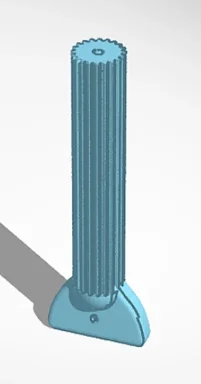
The updated trigger lock tool from Thingiverse represents a quiet but meaningful evolution in how gun owners approach the intersection of security and practicality. By refining the original design to accommodate the coin-key interface and adding a 3 mm screw retention hole, the creator has solved a common pain point: the frustration of fumbling with a loose key when speed or one-handed operation matters. The thickened, fluted handle further signals an understanding that real-world use often happens under less-than-ideal conditions—cold fingers, gloves, or low light—where tactile feedback and grip security become decisive factors rather than afterthoughts.
For the broader Second Amendment community, this kind of grassroots CAD iteration underscores a larger truth: access to effective safety tools need not come at the expense of readiness. A well-designed trigger lock that installs and removes quickly can satisfy both the responsible-storage imperative and the self-defense imperative, two obligations that are too often framed as mutually exclusive. When enthusiasts share these incremental improvements under open licenses, they effectively crowd-source better engineering than many commercial SKUs, all while keeping the focus on voluntary, lawful ownership rather than top-down mandates.
The deeper implication is cultural. Every time a maker posts a refined tool that respects both safety and speed, it quietly rebuts the narrative that gun culture is monolithic or resistant to innovation. Instead, it demonstrates a community that iterates in public, values feedback loops, and treats responsible ownership as an engineering challenge rather than a political concession. In that sense, the modest addition of a locking screw and better ergonomics is more than a convenience upgrade—it’s evidence that the 2A ecosystem continues to solve its own problems faster than regulators can define them.


