

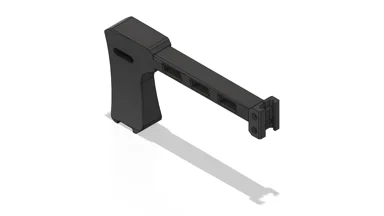
The SB Tactical brace dupe represents a fascinating evolution in the ongoing arms race between regulatory pressure and maker ingenuity. Where the original SB Tactical brace was born from a desire to help disabled shooters stabilize their pistols, this 3D-printed iteration strips away the commercial markup and puts the design directly into the hands of the community. The creator’s pragmatic approach—specifying 100% infill for structural integrity and M5 hardware for reliable attachment—demonstrates that functional firearm accessories no longer require industrial manufacturing; they require only an open-source mindset and a printer capable of handling the geometry.
This development carries significant implications for the 2A community beyond mere cost savings. It underscores how additive manufacturing democratizes access to firearm accessories that regulators have historically targeted through reinterpretation of existing laws. The creator’s acknowledgment of print orientation challenges—suggesting flat printing on the brace side while inviting experimentation with angled prints—reveals the collaborative, iterative nature of this space. Community members aren’t just consuming products; they’re actively refining designs, troubleshooting manufacturing constraints, and sharing solutions in real-time.
Perhaps most importantly, this brace dupe illustrates the futility of attempting to regulate firearm accessories through traditional supply chain controls. When designs can be shared digitally and produced locally on consumer-grade equipment, enforcement becomes nearly impossible without targeting the underlying technology itself. The 2A community has effectively created a distributed manufacturing network that operates faster than regulatory frameworks can adapt, ensuring that innovations in firearm support and stabilization remain accessible regardless of commercial availability or legislative intent.


