

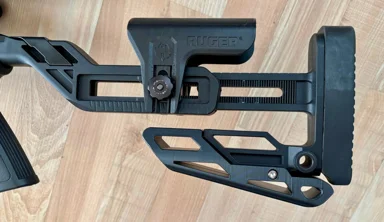
The Ruger Precision Rimfire just picked up a clever aftermarket upgrade that turns its already impressive chassis into a true benchrest contender. A new bag rider design, shared freely on Printables, lets shooters lock the rifle into a rear bag with repeatable precision, eliminating the micro-shifts that plague even the best factory forends when dialing in tiny groups at 50 and 100 yards. What makes this print particularly noteworthy is how it leverages the RPR’s existing M-LOK slots and angled geometry—no permanent mods, no gunsmithing, just drop-in stability that rewards the rimfire shooter who treats .22 LR like a serious precision discipline rather than plinking ammo.
For the 2A community this small, open-source accessory underscores a larger truth: the right to keep and bear arms is meaningless without the right to improve and customize those arms. When enthusiasts freely share files that extend the capability of a popular, affordable platform like the Ruger Precision Rimfire, they’re exercising the same innovative spirit that has kept civilian marksmanship ahead of regulatory creep for generations. The bag rider doesn’t just tighten groups; it tightens the feedback loop between shooter and rifle, proving that grassroots engineering remains one of the most effective counters to any effort to limit what citizens can do with legal firearms.
Beyond the range, the project quietly reinforces why rimfire precision has become the gateway drug for new shooters entering the long-range world. A few dollars in filament and an afternoon of printing can transform a $400–$600 rifle into a rig that competes with far more expensive dedicated benchrest setups, lowering the barrier to entry while raising the skill ceiling. That accessibility matters when anti-2A voices argue that modern sporting rifles are somehow beyond the reach of ordinary citizens; here’s tangible proof that today’s firearms culture is defined by continuous, user-driven improvement rather than static factory offerings.


