

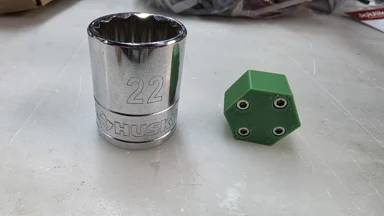
The Ruger Mark IV 22/45 has long been the go-to rimfire trainer for shooters who want 1911-style ergonomics without the cost or recoil of centerfire, yet its barrel nut has always been a point of frustration for anyone chasing consistent accuracy. This clever 3D-printed torque tool turns a factory headache into a repeatable, at-home procedure: four M2.5 screws lock the printed fixture to the nut, a 22 mm socket delivers precise torque, and thread locker keeps everything settled. What used to require a gunsmith’s bench or an expensive proprietary wrench is now a $0.50 print and a torque wrench most reloaders already own.
For the 2A community this is more than a convenience gadget; it’s another brick in the wall of decentralized gunsmithing. When manufacturers design products that assume users will never touch the internals, they implicitly limit how far an owner can tune or maintain the firearm. Tools like this quietly push back, proving that with open-source files and commodity hardware, shooters can restore factory torque specs after suppressor installs, barrel swaps, or simple cleaning cycles. The result is tighter groups, fewer loose-nut malfunctions, and a growing culture of self-reliance that no regulatory climate can easily disarm.
Beyond the Mark IV itself, the design hints at a broader shift: as 3D printing matures, the aftermarket for precision rimfire pistols will increasingly be written in .stl rather than stamped steel. That lowers the barrier for new shooters to keep their trainers in top shape and raises the bar for manufacturers who still treat barrel-nut access as an afterthought. In an era when every incremental improvement in accuracy or reliability can be shared globally in minutes, this little ABS fixture is a reminder that the right to keep and bear arms includes the right to keep them running exactly as intended.


