

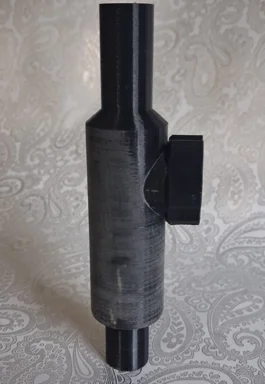
The rope cleaner is a deceptively simple 3D-printed device that turns an ordinary garden hose into a high-pressure water jet capable of flushing grit and debris from the core of climbing ropes up to 14.5 mm in diameter. By feeding the rope through the nozzle in short sections, users can literally blow particulates out of the interior strands—damage that would otherwise remain invisible until a critical failure occurs. What makes the design noteworthy is its minimalism: only the nozzle itself needs supports, so any hobbyist with a basic printer can produce a tool that extends the safe service life of expensive safety equipment.
For the 2A community, the lesson is straightforward: the same desktop manufacturing revolution that lets shooters print lower receivers, magazine bodies, and holster components is equally useful for maintaining the gear that keeps us alive on the range or in the backcountry. A rope cleaner may seem far removed from firearms, yet it embodies the same principle—citizens using open-source files to solve problems that manufacturers either ignore or over-price. When regulatory pressure threatens access to factory replacement parts or specialty tools, the ability to print a purpose-built jig or cleaning fixture becomes a quiet but powerful act of self-reliance.
Beyond the practical benefit, the design quietly normalizes the idea that ordinary people can engineer safety solutions without waiting for corporate or bureaucratic approval. That mindset is the connective tissue between the climbing gym and the gun range: both communities prize competence, both rely on equipment that must not fail, and both benefit when enthusiasts share files instead of hoarding knowledge. In an era when every new restriction on lawful ownership is sold as “safety,” the rope cleaner is a reminder that real safety often comes from individuals who refuse to outsource their problem-solving to distant authorities.


