

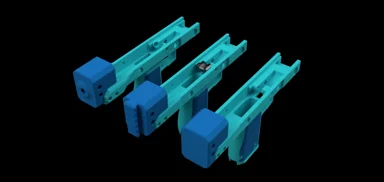
The PWC 2.0 update is more than a firmware tweak—it’s a deliberate nod to the fact that the modern 3D-printed firearm isn’t just a static object; it’s a living, breathing system that can be tuned like any other piece of precision hardware. By introducing a “twitch” trigger response, the designers are acknowledging that shooters want the same kind of fine-grained control over their printed guns that they already expect from aftermarket triggers, optics, and recoil springs. In a world where the ATF still pretends that a few lines of code can’t turn a hobbyist printer into a miniature armory, this update quietly demonstrates that the barrier between “novelty” and “practical defensive tool” is evaporating faster than regulators can draft new rules.
For the 2A community, the real story isn’t the feature itself—it’s the cultural shift it represents. When a gun can be iterated on the same cadence as smartphone apps, the old regulatory model built around serialized metal frames and weeks-long Form 4 waits starts to look like a relic. The PWC 2.0 release also underscores how quickly open-source files can absorb real-world feedback: one user’s complaint about reset feel becomes another user’s pull-weight mod, which then ships to thousands of builders overnight. That speed is the Second Amendment’s new force multiplier; it turns every kitchen-table gunsmith into both a tester and a distributor, making top-down control of “who has what” nearly impossible.
The broader implication is that the future of American gun culture will be written in G-code and pull-request comments rather than in Federal Register notices. As more builders adopt modular trigger profiles, caliber swaps, and even caliber-agnostic frames, the line between “assault weapon” and “modular chassis” blurs beyond recognition. Regulators can ban a model number, but they can’t ban an afternoon spent recompiling firmware. In that sense, PWC 2.0 isn’t just a software patch—it’s a proof-of-concept that the right to keep and bear arms is migrating from the factory floor to the filament spool, one twitch at a time.


