

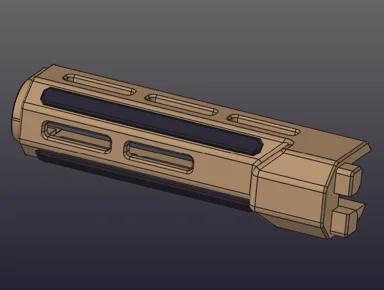
The Praxis-2 AKM handguard represents a quiet but meaningful evolution in how the 2A community is taking control of its own tooling. By pairing a rigid, 100% infill PA6-GF core with soft TPU side panels that users glue on after printing, the design solves the classic AK problem of heat and vibration without forcing anyone to buy an overpriced factory rail. The orientation notes and slim-tree supports are small details, yet they reveal an author who has actually iterated on the platform rather than simply exporting a model and walking away. In an era when big manufacturers still treat the AK like a finished product instead of a modular system, this kind of open-source furniture quietly shifts power back to the end user.
What makes the release especially interesting is its deliberate minimalism. There are no proprietary fasteners, no DRM, and the license is plain CC-BY; anyone with a printer and a spool of filament can participate. That accessibility matters when supply chains tighten or when states attempt to restrict aftermarket parts. The decision to let builders choose their own side-panel material—TPU for grip, wood for tradition, or even aluminum for weight—turns the handguard into a living platform rather than a single SKU. It also underscores a broader trend: the most durable resistance to regulatory pressure may not be another lawsuit, but thousands of distributed, printable designs that cannot be regulated out of existence.
For the community, the real implication is cultural as much as practical. Projects like this normalize the idea that an AK is not a static rifle but a continually improvable chassis. They reward experimentation, punish gatekeeping, and create a growing library of parts that survive even if individual hosts or vendors disappear. In that sense the Praxis-2 is less a product and more an argument: the future of the platform belongs to those willing to print, iterate, and share.


