

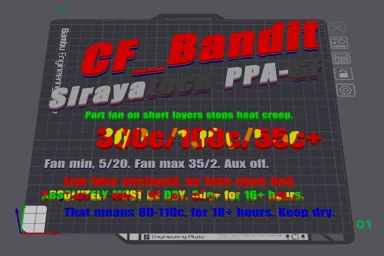
The PPA-GF profile that CF_Bandit just dropped is more than a .3mf pack—it’s a reminder that the same additive-manufacturing revolution that’s letting hobbyists print high-strength nylon composites is also the same one that keeps the 2A community ahead of every regulatory curveball. When a filament demands a 300 °C nozzle and a 100 °C chamber just to flow, you’re not talking about glorified PLA toys; you’re talking about parts that can survive the heat, pressure, and solvents inside a modern firearm. That kind of performance used to live behind NDAs at defense contractors; now it’s a Patreon download and a couple kilograms of wasted filament away.
What makes the release especially potent is the implicit nod to the iterative, crowd-sourced nature of the scene. CF_Bandit didn’t just hand out numbers—he flagged the necessity of pressure-advance and volumetric-flow calibrations, essentially telling users that dialing in a lower receiver or trial suppressor mount isn’t a weekend project, it’s an engineering discipline. That culture of relentless testing and data sharing is exactly what turns garage printers into decentralized R&D nodes, each one stress-testing geometries that legacy manufacturers would never green-light for fear of liability or optics.
For the broader 2A ecosystem the takeaway is straightforward: the tooling gap between individual and industry is collapsing. As long as open-source profiles keep pace with material science, the ability to produce mission-capable components at the speed of legislation will remain in the hands of private citizens. The only subscription required is time, filament, and the willingness to run the numbers until the printer—and the platform—both go bang reliably.


