

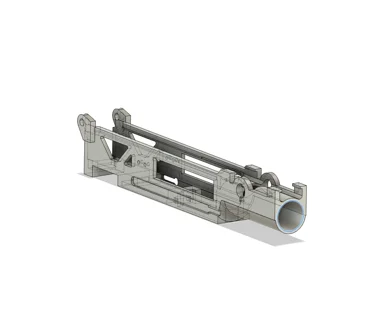
The emergence of a 3D-printed CTAR21 receiver marks another milestone in the ongoing evolution of decentralized firearms manufacturing, where hobbyists are no longer content to simply replicate existing designs but are actively reimagining iconic platforms like the Israeli Tavor in polymer. This pre-alpha effort, still untested and very much a work in progress, signals that the barrier to entry for producing bullpup-style rifles is dropping faster than many regulators anticipated. What makes this particularly noteworthy is the deliberate choice to tackle a platform known for its compact layout and ambidextrous controls—features that traditionally required precision machining and tight tolerances—now being approached through additive manufacturing. For the 2A community, this isn’t just about one printable receiver; it’s about the accelerating feedback loop between open-source design files, affordable printers, and a growing cohort of builders who treat firearms as modular systems rather than monolithic products.
The implications stretch well beyond the workshop. As more enthusiasts experiment with platforms like the CTAR21, the conversation around “ghost guns” and regulatory definitions becomes increasingly detached from technical reality. A receiver that can be printed, iterated, and reprinted in days undercuts the logic of serialization requirements and background-check regimes that assume firearms are difficult to produce. At the same time, the pre-alpha status of this project underscores the community’s self-policing ethos: files are shared with explicit disclaimers, testing is crowd-sourced, and safety remains a collective responsibility rather than a government mandate. This dynamic frustrates officials who prefer top-down control, yet it also demonstrates how a rights-respecting culture can emerge organically when individuals are empowered to build, test, and improve upon each other’s work.
Ultimately, the plastic CTAR21 receiver is less a finished product and more a proof-of-concept that the Second Amendment’s protections extend into the digital age. By treating firearms data as speech and printers as presses, the community is forcing a reckoning with legacy regulatory frameworks that were never designed for a world where a compact, select-fire-capable bullpup can be prototyped on a desktop. Whether this particular design matures into a reliable, field-ready rifle or remains an experimental curiosity, its existence alone expands the Overton window of what is considered possible—and legally defensible—for private citizens exercising their right to keep and bear arms.


