

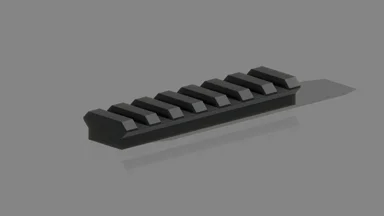
The open-source release of a meticulously measured Picatinny rail template is more than a convenience for CAD jockeys—it’s a quiet act of defiance against the idea that only big manufacturers should control the geometry of firearm interfaces. By publishing metric data pulled straight from mil-spec sheets, the creator has handed every garage gunsmith, 3D-printing hobbyist, and small-batch accessory maker the exact dimensions needed to build rails that will truly interchange with anything already on the market. That single file removes a layer of friction that has historically funneled innovation toward companies large enough to license drawings or reverse-engineer under NDA.
For the broader 2A community, the implications stretch well beyond one rail profile. When foundational specs circulate freely, cottage-industry innovators can iterate faster than regulatory cycles can react, producing modular handguards, optic mounts, and chassis systems that keep civilian rifles adaptable no matter what new rule Washington floats next. It also democratizes repair: if a rail section gets damaged on a duty-grade carbine, anyone with a printer or CNC mill can fabricate a replacement instead of waiting on back-ordered factory parts. In an era when polymer lowers and 80-percent frames already test the limits of “readily convertible” language, an openly shared rail spec quietly reinforces the argument that the underlying technology belongs to the people who actually use it.
Ultimately, this template is a reminder that interoperability is itself a form of resilience. The more widely these measurements spread, the harder it becomes for any single entity—corporate or governmental—to dictate how Americans configure their firearms. That’s not just good CAD practice; it’s a tangible expression of the decentralized responsibility the Second Amendment presupposes.


