

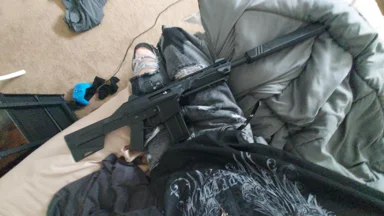
The Phantom open beta drops a fully printable AR-22 that borrows its silhouette straight from Valorant’s signature rifle, proving once again that the line between digital culture and physical hardware is now paper-thin. By leaning on 99 % printed construction and pre-oriented files, the project lowers the barrier for anyone who already owns a printer and a few fasteners, while the July 10 update quietly reminds builders that 0.100-inch sheet metal is now mandatory for the SCS components—small but telling evidence that even “print-and-shoot” designs still need real-world metallurgy to survive sustained fire. In a landscape where legacy manufacturers treat polymer lowers as exotic, this release treats the entire receiver set as disposable, shifting the conversation from “what can I buy?” to “what can I iterate on tonight?”
For the 2A community the implications are immediate and double-edged. On one hand, the Phantom demonstrates that cosmetic mimicry and functional reliability can coexist inside a single STL folder, giving younger shooters an on-ramp that feels native to the games they already play. On the other, it accelerates the decentralization of manufacturing at a moment when regulators are still arguing over frames and receivers; every successful beta test effectively crowdsources both design validation and legal gray-area exploration. The LBRY tags—guns, CAD, 3D2A, guncad, fosscad—aren’t just metadata; they’re a breadcrumb trail showing how open-source workflows have matured from niche experiments into parallel supply chains that no single statute can fully map.
What matters most is the velocity. A Valorant skin that began as pixels now exists as a testable firearm platform updated on a public ledger, complete with a living BOM and community troubleshooting. That speed compresses the traditional industry’s multi-year R&D cycles into weekend sprints, forcing everyone—manufacturers, legislators, and hobbyists alike—to confront a future where the next generation of small arms may be prototyped faster than it can be classified.


