

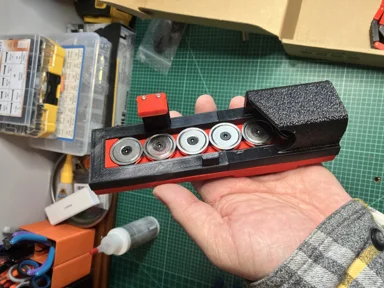
The MagDock PCC V2 represents a quiet but meaningful evolution in how competitive shooters and everyday carriers are rethinking magazine management for pistol-caliber carbines. By ditching the traditional friction-based retention screws in favor of neodymium cup magnets, the design eliminates the constant fiddling that comes with adjusting tension on polymer bodies—especially useful when you’re swapping between different magazine generations or running a mix of factory and aftermarket sticks. The real engineering win, though, is the decision to build around the Tek-Mount Mini ecosystem and keep every structural piece serviceable with common metric hardware; that means if a backplate cracks at a match or you want to migrate the same carrier from a belt to a chest rig, you’re not reprinting an entire assembly—you’re just bolting on a new interface plate.
What makes this particularly relevant to the 2A community is how it quietly sidesteps the fragility trap that’s plagued many 3D-printed “range toys.” The V2’s enclosed lower body and extended adjustment range on the backplate show a designer who’s actually listened to people running these carriers hard rather than just optimizing for Instagram photos. The fact that Beretta-pattern PCC mags get their own 16 mm magnet variant instead of a one-size-fits-all solution speaks to a level of attention that’s still rare in the open-source gun space. More importantly, by publishing full BOMs, tested print settings, and even a legacy V1 archive, the creator is modeling the kind of documentation that turns a single clever idea into infrastructure the broader community can build on.
Longer term, this kind of modular, magnet-retained system could accelerate a shift away from the “buy once, cry once” mentality that dominates commercial kydex gear. If the mounting standard proliferates, we might see local print farms or even big-box hardware stores stocking standardized MagDock plates the way they stock Picatinny rails today. That’s not just convenient—it’s a tangible example of how decentralized manufacturing can keep pace with regulatory uncertainty. When the next round of import restrictions or capacity bans hits, the ability to reprint or reconfigure a carrier in an afternoon becomes more than a hobbyist convenience; it becomes a practical hedge against supply-chain fragility.


