

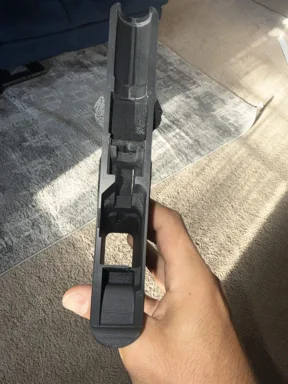
The 3D-printing community has quietly become one of the most important proving grounds for the future of the Second Amendment, and the release of these finely tuned PLA+ and HT PLA Pro profiles is a perfect example of why. What looks like a simple slicer preset is actually a distillation of hundreds of hours of trial-and-error that turns commodity filament into reliable, high-strength components—exactly the kind of knowledge that keeps home gunsmithing ahead of regulatory creep. By publishing the “bestPersonal-settings” that work across both everyday PLA+ and tougher HT PLA Pro, the author isn’t just helping people dial in their printers; he’s lowering the barrier to entry for anyone who wants to experiment with custom frames, jigs, or replacement parts without waiting on commercial supply chains.
The real story here isn’t the numbers themselves; it’s the philosophy behind them. In an era when polymer80-style kits are disappearing from store shelves and big-box retailers are tightening their own rules, the ability to print durable, repeatable parts at home is becoming a form of digital self-reliance. These settings prove that the performance gap between “hobbyist” filament and purpose-built engineering resins is shrinking fast, which matters when the next round of ATF guidance or state-level restrictions tries to define what counts as a “firearm” versus a “piece of plastic.” The more people master these profiles, the harder it becomes for regulators to pretend that technical knowledge can be controlled the same way physical inventory is.
For the broader 2A ecosystem, this kind of open-source tinkering serves as both insurance policy and innovation engine. Every time a new profile drops, it adds another layer of redundancy to the community’s ability to produce, repair, and iterate on firearms-related components regardless of what happens in Washington or Sacramento. That redundancy is the quiet counterweight to every attempt to choke off access at the point of sale; it moves the conversation from “what can I buy?” to “what can I make?”—and that shift is exactly why these seemingly niche slicer tweaks deserve attention far beyond the 3D-printing forums where they first appear.


