

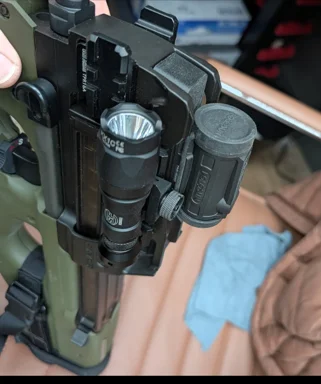
The P90 platform has always been a study in contradictions—its futuristic bullpup layout and top-mounted magazine promise compactness and high capacity, yet the factory optics rail sits so high that many shooters feel like they’re wearing a periscope. When a builder decided the only acceptable solution was to print a mount that drops a Holosun ARO as low as mechanically possible, the move wasn’t just about saving a hundred bucks; it was a quiet referendum on how far cottage-industry manufacturing has come. Instead of waiting for a big-name accessory house to notice the niche, the maker treated the firearm like open-source hardware, iterating until the optic co-witnessed with the factory sights and cleared the magazine well without adding ounces of machined aluminum.
That single printed interface quietly reframes the economics of the PS90/P90 ecosystem. Where once an aftermarket rail or cantilever mount carried the same price tag as a decent used carbine, the barrier to sensible ergonomics is now measured in grams of filament and hours of print time. The ripple effect is obvious: owners who previously ran backup irons or skipped an optic altogether can now experiment with red-dot speed without financial pain, and the same workflow scales to other oddball platforms that manufacturers have largely abandoned. In a regulatory environment that increasingly treats magazines and receivers as political footballs, the ability to locally fabricate mounting solutions is more than a convenience—it’s a hedge against future scarcity.
For the broader 2A community, this is less about one clever STL file and more about the normalization of user-driven design loops. Every time a hobbyist solves a problem the market has ignored, the argument that civilians can’t be trusted with modern manufacturing tools loses another inch of ground. The P90 ARO mount may look like a weekend project, but it’s also a data point proving that rights exercised are rights preserved; the more shooters treat their firearms as modifiable systems instead of sealed appliances, the harder it becomes for anyone to claim the technical literacy gap justifies further restrictions.


