

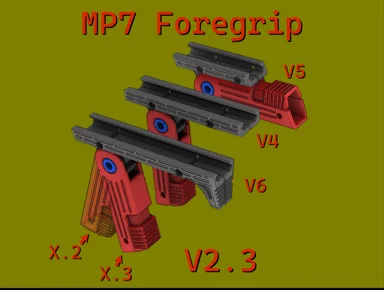
The MP7 foregrip project is a perfect snapshot of how the 2A community turns a single, clever idea into a living, breathing ecosystem. What began as a simple Picatinny adapter has evolved through six major revisions, each one driven by real-world feedback from builders who refuse to accept “good enough.” The addition of metric hardware, angled grip options, and a built-in hand stop shows a community that treats ergonomics as seriously as any OEM, yet moves at a pace no government contractor could match. Every update—whether it’s a second screw hole or a shorter rail grab—represents dozens of printed prototypes, range tests, and late-night forum threads where users trade measurements and photos until the part finally “just works.”
Beyond the hardware, the project quietly democratizes a platform that was once the exclusive domain of special-operations units. By publishing every iteration in STEP, STL, and ZIP bundles, the designer hands the entire evolution to anyone with a printer and a few dollars in fasteners. That open-source momentum ripples outward: new users remix the files for different rail heights, color-match them to their receivers, or combine the angled grip with custom mag wells. The result is a growing constellation of MP7-pattern guns that no single manufacturer could catalog, each one reflecting its owner’s preferences rather than a catalog SKU.
For the broader 2A world, this is more than a foregrip; it’s proof that rights exercised are rights preserved. When civilians can design, iterate, and share improvements faster than legacy companies can file patents, the practical effect is a distributed R&D network that keeps modern sporting arms adaptable and affordable. The MP7 foregrip story shows that the future of firearms innovation isn’t locked behind a factory door—it’s distributed across kitchen tables, garage printers, and the shared conviction that individuals, not institutions, should decide how their tools feel in hand.