

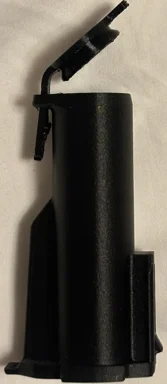
The Magpul 18650 grip core is a clever, field-ready solution that turns an ordinary MOE pistol grip into a self-contained power bank for weapon-mounted lights, lasers, or even small electronics. By printing the core in PET-CF and the cap in 95A TPU, the designer solved the classic problem of polymer fatigue: the tab stays springy after hundreds of insertions, and the TPU plug keeps the battery seated even when the core is yanked out for a quick swap. That level of durability matters when you’re running night-vision or IR illuminators that can’t afford a dead cell mid-drill.
What makes this more than a neat print is the way it quietly expands the capability envelope of an already ubiquitous grip. Instead of bolting on an extra rail or a bulky external battery case, users now have 3,500-plus milliamp-hours tucked inside the grip itself—enough to run a modern weapon light for an entire range day or keep a thermal optic alive through a multi-hour night shoot. The fact that the design is openly iterated, material-specific, and tested to 200 cycles shows the 2A community doing what it does best: taking a mass-market product and making it measurably better without waiting for a manufacturer’s quarterly update cycle.
For the broader movement, this is another data point that 3D-printed accessories are no longer novelties; they’re force multipliers. When hobbyists can solve real ergonomic and power-management problems faster than big companies can ship injection-mold tooling, the regulatory argument that “only manufacturers should make gun parts” starts to look outdated. The grip core is small, legal, and unserialized, yet it delivers capability that used to require a separate powered fore-end or a custom machine shop. That’s the quiet revolution—ordinary gun owners printing solutions that keep their rifles relevant, reliable, and ahead of the next round of restrictions.


