

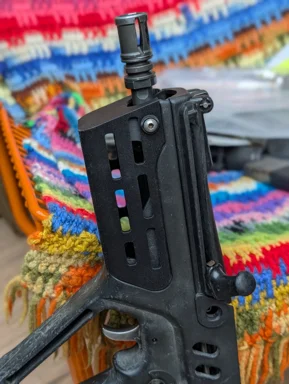
The Tavor CTAR-21’s factory handguard has long been a love-it-or-hate-it proposition—its bulbous “tactical tuna” profile may have been born of the need to swallow the bullpup’s action, but it left many owners wishing for something slimmer and more modular. By hacking together existing M-LOK designs and printing the result in a high-temperature nylon-carbon composite, this builder has effectively turned a closed ecosystem into an open platform. The move is more than cosmetic; it restores the ability to mount lights, grips, and bipods exactly where the shooter wants them, without having to hunt down scarce factory button assemblies or accept a rail interface that was never designed for aftermarket growth.
What makes the project noteworthy is the implicit statement it makes about ownership. Rather than petitioning IWI or waiting for an official accessory, the builder treated the rifle as a living system that can be improved with open-source files and a desktop printer. That mindset mirrors the broader 2A community’s shift from passive consumers to active tinkerers who view their firearms as extendable hardware rather than sealed appliances. In an era when regulators eye braces, pistol grips, and even threaded barrels, the ability to fabricate your own mounting solutions becomes a quiet act of resilience—proof that the right to keep and bear arms still includes the right to adapt those arms to modern needs.
The ripple effects are practical as well as philosophical. A printable M-LOK handguard lowers the barrier for new shooters who might otherwise balk at the cost of boutique Israeli aftermarket parts, and it invites experimentation that could feed back into commercial designs. If enough users adopt the pattern, cottage manufacturers may start offering injection-molded or aluminum versions, accelerating the very modularity the original rifle lacked. In short, one weekend project quietly expands the Tavor’s relevance in a market that increasingly rewards adaptability over factory perfection.


