

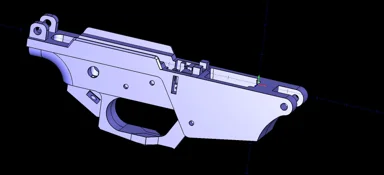
The release of a complete Kuna lower receiver in editable STEP format marks a quiet but meaningful evolution in how the 2A community approaches firearm customization. Rather than locking users into rigid, one-size-fits-all designs, this file hands builders the ability to tweak geometry, adjust tolerances, and experiment with features that commercial manufacturers rarely prioritize. The explicit “no commercial use, no resale” clause keeps the spirit firmly in the maker and hobbyist lane, signaling that the intent is empowerment rather than profit—yet the underlying message is clear: the tools of production are no longer the exclusive domain of big industry.
For the broader firearms community, this kind of open-source geometry accelerates the feedback loop between shooter and designer. Builders who once waited months for aftermarket support can now prototype fixes for ergonomics, weight distribution, or compatibility issues in hours. It also underscores a growing reality that regulatory pressure on finished products is being met with decentralized, digital resistance; when a lower can be modified at the file level, attempts to control configurations become far more difficult to enforce. The invitation to request further changes further democratizes the process, turning a single file into a living platform shaped by collective input rather than top-down mandates.
Ultimately, the Kuna lower STEP file is less about one specific firearm and more about the trajectory of rights in an era of additive manufacturing. It demonstrates that technical literacy and file-sharing networks can outpace legislative or corporate gatekeeping, giving individuals the practical means to exercise their Second Amendment rights on their own terms. As more components migrate into editable formats, the community gains not just parts, but the autonomy to define what those parts should be.


