

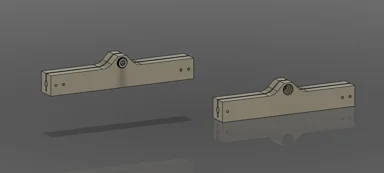
The DeCBAR-22 community just leveled up its tooling with a refined set of linkage-rod jigs that promise tighter tolerances and fewer do-overs when builders cut and drill the critical rods that tie the bullpup’s trigger group together. By swapping in a simple M4 bolt-and-nut clamp, the new fixtures eliminate the wiggle room that older printed jigs sometimes allowed, translating directly into smoother function and fewer misfeeds once the rifle is assembled. The fact that a STEP file rides along means any builder who wants to tweak the geometry for a slightly different barrel contour or stock angle can do so without starting from scratch—an open-source ethos that keeps the platform evolving faster than any single manufacturer could manage.
For the broader 2A world, these incremental tooling improvements are more than hobbyist niceties; they demonstrate how distributed, permissionless fabrication is steadily closing the gap between what legacy gunmakers can produce and what individuals can achieve in a garage. Every time a new jig or fixture drops, it lowers the barrier for the next person who wants an ultra-compact 22 LR bullpup without waiting on back-ordered factory parts or navigating ever-shifting import restrictions. In an era when regulators eye even rimfire platforms with suspicion, the ability to repair, customize, and iterate at the kitchen table is a quiet but powerful affirmation of the right to keep and bear arms—especially when that arm is one you literally built yourself.


