

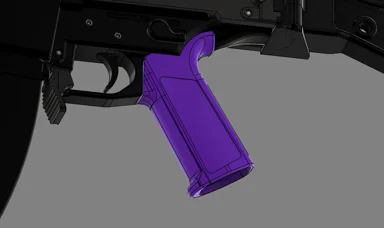
The HK UMP-style AR grip represents a fascinating intersection of nostalgia and modern customization culture, where enthusiasts are essentially reverse-engineering iconic firearm ergonomics to enhance their AR platforms. This isn’t merely about aesthetics—it’s about the tactile connection to a weapon system that defined an era of tactical design, bringing that distinctive UMP grip angle and texture profile to the ubiquitous AR-15 platform. The 3D printing community’s ability to produce these components democratizes access to what would otherwise require expensive aftermarket parts or custom machining, fundamentally shifting the power dynamic from manufacturers to individual builders who can now iterate and experiment with form factors that were previously locked behind corporate design decisions.
For the 2A community, this development signals a broader trend toward technological self-sufficiency that extends beyond mere parts manufacturing. When builders can replicate and adapt iconic grip designs through additive manufacturing, they’re exercising a form of digital gunsmithing that challenges traditional supply chain dependencies and regulatory frameworks designed around centralized production. The implications stretch into questions of design ownership, where the UMP’s distinctive grip becomes part of a shared cultural commons rather than proprietary intellectual property, potentially accelerating innovation as enthusiasts remix and improve upon established designs without corporate gatekeeping.
This grip mod also reflects the community’s ongoing evolution from passive consumers to active creators, where the line between clone building and original design work becomes increasingly blurred. As more builders adopt these hybrid approaches—combining the AR platform’s modularity with the ergonomic DNA of other iconic firearms—we’re witnessing the emergence of a truly post-industrial firearms culture where individual preference and functional optimization trump standardized manufacturing. The UMP grip on an AR isn’t just a cosmetic choice; it’s a statement about who controls the future of firearm design, and increasingly, that answer is shifting from boardrooms to workbenches.


