

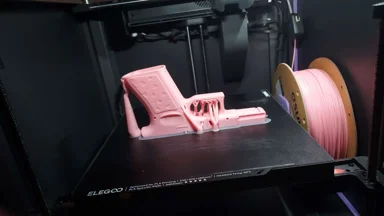
The DD19.2 frame from Hearts is more than just another Glock-compatible chassis; it’s a quiet but pointed reminder that the 2A community is no longer content to wait for permission slips from legacy manufacturers. By releasing an OEM-spec Glock 19 frame under an open-source ethos, Hearts is effectively telling the market that the days of paying a premium for a polymer shell are numbered. The move also underscores how far 3D-printing and CNC technology have come—today’s hobbyist can produce a frame that meets or exceeds the tolerances of a factory part, and do it without ever stepping into a gun store.
What makes this release especially interesting is the timing. With several states tightening restrictions on “ghost guns” and the ATF continuing to float new rules around privately made firearms, the DD19.2 arrives as both a technical achievement and a political statement. It demonstrates that the tooling and files needed to build a Glock-pattern pistol are now widely distributed and nearly impossible to put back in the box. For the broader 2A community, that decentralization is the real story: every new open-source frame lowers the barrier to entry, raises the cost of enforcement, and keeps the conversation about rights firmly in the realm of technology rather than regulation.
Beyond the politics, the DD19.2 also hints at where the cottage industry is headed. Expect to see more hybrid frames that blend OEM dimensions with user-driven improvements—better ergonomics, integrated optics plates, or even modular grip modules that swap in minutes. In short, Hearts isn’t just selling a frame; it’s accelerating a shift in which the end user, not the corporation, decides what a Glock should be.


