

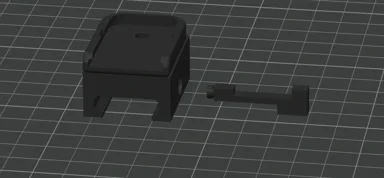
The latest iteration of a Glock 17 magazine baseplate rail adapter is more than a clever 3-D-printed accessory—it’s a quiet reminder that the Second Amendment’s protections extend to the tools and techniques citizens use to customize and maintain their firearms. By printing the part in carbon-fiber-reinforced nylon at 80 % gyroid infill and eight wall loops, the maker has produced a component that can survive the repeated impacts and spring pressures of daily carry or competition use. That level of durability, achieved on a desktop printer, underscores how additive manufacturing is lowering the barrier between an idea and a functional upgrade, letting individuals tailor their equipment without waiting for a commercial catalog.
Beyond the technical specs, the project illustrates the broader cultural shift underway in the gun community: an open-source, iterative design loop that invites shooters to refine, remix, and redistribute improvements. The builder’s promise to publish spring and retainer-pin dimensions once final tweaks are complete turns a single file into a living blueprint, one that others can stress-test, remix, or scale to different Glock variants. In an era when regulators eye 3-D-printed firearms with suspicion, this transparent, collaborative workflow demonstrates that the vast majority of such innovation is aimed at lawful self-improvement rather than illicit manufacture.
For Second Amendment advocates, the takeaway is straightforward: the right to keep and bear arms is hollow if citizens cannot also keep and bear the knowledge required to maintain and enhance those arms. Each shared STL, each documented print setting, and each disclosed hardware spec is an act of quiet preservation—proof that the ecosystem of American gun culture is as resilient and adaptive as the polymer-framed pistols it embraces.


