

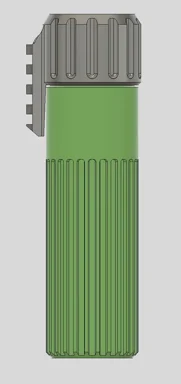
The FTN4 Remix takes the already clever printed-piston architecture of the original FTN4 and folds in the Mock-X’s lessons on geometry, heat paths, and modularity, producing a hybrid that feels less like a one-off experiment and more like a platform. Where the first FTN4 proved a polymer piston could survive the abuse of a 5.56 gas system, this remix refines the piston head profile and the way the operating rod interfaces with the bolt carrier, trimming mass and smoothing the impulse curve. The result is a noticeably softer-shooting printed lower that still keeps the bolt carrier riding on steel where it matters, a nod to the Mock-X’s insistence that hybrid strength beats all-plastic bravado.
For the 2A community the deeper story is about iteration velocity. A design that once took a machinist weeks to re-profile can now be forked on a Sunday, printed by Monday, and stress-tested by Tuesday. That speed collapses the traditional feedback loop between designer and shooter; every range trip becomes R&D. It also democratizes performance upgrades that used to live behind solvent traps of patents and lead times. When a remix can outrun the factory part in weight, reliability, and cost, the old gatekeepers lose their strongest argument—that only big factories can be trusted with hard-use components.
The larger implication is cultural as much as technical. Projects like the FTN4 Remix signal that homebuilders are no longer content to assemble; they are tuning. That shift reframes “printable” from a curiosity into a standing challenge to legacy manufacturers: adapt your margins and your politics, or watch your feature set get forked by people who treat an STL file like source code. In a regulatory environment that already eyes braces and pistol grips, the ability to iterate faster than the rule-makers can draft definitions may prove the most durable form of resistance.


