

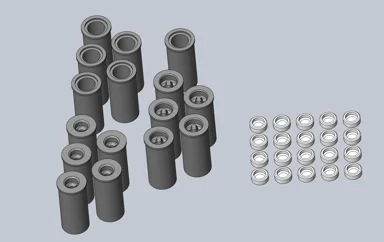
The fossa-9PAK-R-v1 release is a reminder that the 2A community’s real power lies in its ability to iterate faster than any regulatory body can draft a rule. By turning a blank-firing revolver into a platform that can safely cycle 3-D-printed cartridges, the designer has collapsed the traditional supply chain—brass, primer, powder, bullet—into a single, printable object. That move doesn’t just lower the cost of a range day; it removes the choke-point where governments have historically tried to meter access to ammunition. The linked Notachi-T2 footage shows the round functioning in a purpose-built platform, proof that the concept has already leapt from CAD file to live fire without waiting for industry tooling or import licenses.
What makes the project more than a stunt is the deliberate friction it introduces for would-be censors. Because the cartridge is generated from open-source geometry rather than purchased components, every parameter—wall thickness, internal cavity volume, even the placement of the primer pocket—can be tuned by the end user. That flexibility turns a regulatory target into a moving one: any attempt to ban a specific “type” of ammunition is instantly outdated the moment someone recompiles the file with a different shoulder angle or rim thickness. In effect, the fossa-9PAK-R-v1 treats ammunition less like a finished good and more like firmware, subject to the same rapid, permissionless evolution that has already transformed the firearm space.
For the broader gun-rights movement, the lesson is strategic rather than tactical. While legacy manufacturers lobby for carve-outs and FFLs navigate ever-tighter serialization rules, small crews of anonymous designers are quietly normalizing the idea that a functioning round of ammunition can be nothing more than data plus filament. That normalization shifts the Overton window: once the public accepts that anyone with a printer can become their own ammunition plant, arguments for capacity limits or background checks on ammo purchases start to look technologically quaint. The fossa-9PAK-R-v1 may still be rough around the edges, but its existence signals that the next arms race won’t be measured in factory output—it will be measured in lines of code and kilograms of polymer.


