

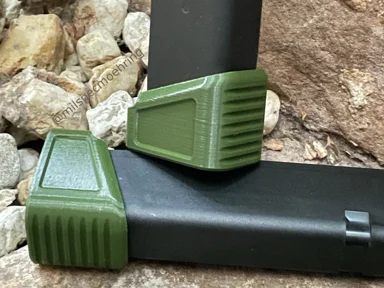
The 3D-printing community just dropped another practical win for Glock owners who want more rounds without buying factory extensions or waiting on backorders. By printing a simple baseplate extension that mates to the OEM Glock 17 magazine body, users can add capacity while keeping the original spring and follower—something that matters when reliability under stress is non-negotiable. The design cleverly sidesteps the usual weak points of printed mags by retaining the factory internals and only replacing the floorplate, then locking everything down with heat-set M3 inserts and a pair of short screws. That hybrid approach gives the strength of metal where it counts and the customization freedom of additive manufacturing everywhere else.
For the 2A community this is more than a weekend project; it’s a quiet demonstration of how distributed manufacturing can blunt supply-chain chokepoints and magazine-capacity restrictions. When states limit magazine sales or manufacturers throttle production, hobbyists who can print, modify, and reinforce their own gear keep options open. The requirement for basic tools and off-the-shelf hardware also lowers the barrier compared with machining an entire magazine from scratch, letting more shooters participate in the ecosystem rather than just consume it. At the same time, the explicit nod to “local laws apply” reminds everyone that technical capability doesn’t erase legal boundaries—responsible ownership still means knowing the rules in your jurisdiction.
Beyond the hardware itself, the project underscores a cultural shift: the same open-source ethos that once lived mainly in the PC-building world is now shaping firearms accessories. Every shared STL, every tweak to infill or perimeter count, becomes collective R&D that no single company controls. That decentralization is exactly what the Second Amendment was meant to protect—an individual’s ability to keep and bear arms without depending on the goodwill of distant corporations or restrictive governments. As more of these designs circulate, the conversation moves from “can we make this?” to “how do we do it better, safer, and within the law?”—a question the 2A community is uniquely equipped to answer.


