

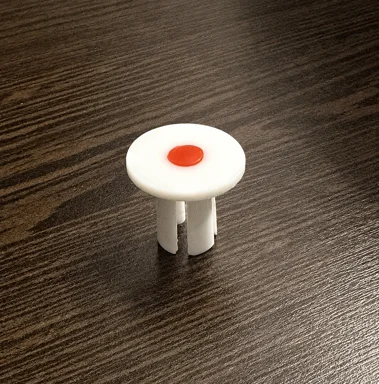
The Dry Fire Pro muzzle mount is a small but telling example of how the 2A community is quietly turning consumer-grade smartphones into precision training tools. Instead of relying on expensive laser cartridges or dedicated simulators, shooters can now print a simple two-piece fixture that gives the app’s front-camera tracker a repeatable, high-contrast target every single time. That consistency matters: the app’s value lies in measuring minute muzzle movement, and any variation in the marker itself—creases in a sticker, smudges, or off-center placement—adds noise to the data. By locking the geometry to an 18 mm ring and eliminating adhesives, the mount removes those variables and lets the software focus on diagnosing trigger faults rather than compensating for imperfect targets.
What’s more interesting is the cultural signal this represents. A few years ago, the idea of publishing STL files for a barrel plug that doubles as a dry-fire aid would have seemed niche at best. Today, the files are offered freely, with an open invitation for new calibers on request, and the author is already iterating on an improved version. That rapid, user-driven feedback loop mirrors the same decentralized innovation that has kept the firearms community ahead of regulatory pressure: when commercial options are slow, expensive, or restricted, makers simply design around the constraint. The mount’s friction-fit, crown-safe design also underscores a broader emphasis on safety culture—explicit instructions to verify an empty chamber and remove the device before live fire show that enthusiasts are writing their own best practices rather than waiting for top-down mandates.
For the 2A community, the takeaway is twofold. First, inexpensive, printable accessories like this lower the barrier to deliberate practice, which in turn strengthens the argument that armed citizens can and do maintain proficiency without constant range fees or boutique instruction. Second, it illustrates how tightly integrated the digital and physical worlds have become for gun owners: an iPhone, a $20 spool of filament, and an afternoon of printing can replicate what used to require several hundred dollars of specialized hardware. As more shooters adopt these workflows, the community’s ability to document, refine, and share training methods grows faster than any regulatory effort to slow it down.


