

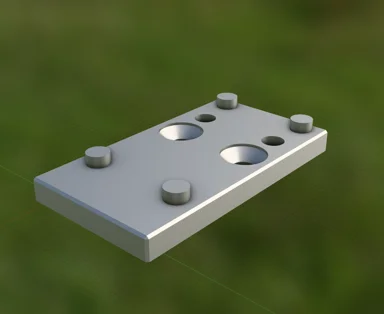
The Docter-to-RMSc adapter plate is more than a clever print; it’s a direct strike against the artificial scarcity that optics manufacturers have long imposed on the aftermarket. By releasing dimensionally accurate models of both footprints alongside the adapter itself, the designer has effectively published an open-source Rosetta Stone for red-dot mounting. That single act collapses the walled gardens that once forced shooters to choose between a slide cut and an optic, or to pay premium prices for factory plates that often arrived weeks late and still required fitting. In practical terms, a PA6-GF print, two M3 screws, and a pair of M4 jam nuts now let any Docter-cut slide host the growing ecosystem of RMSc optics—Sig Romeo Zero, Holosun 507K, EPS Carry—without waiting on back-ordered steel plates or surrendering to a gunsmith’s bench fees.
For the 2A community this is quiet but potent infrastructure work. It demonstrates that the same tools used to prototype lowers and frames can also democratize the optics layer that increasingly defines modern defensive and competition pistols. When a hobbyist can iterate recoil-lug geometry in FreeCAD, drop a 100 % infill part onto the bed, and have a functional mount the same afternoon, the power dynamic between large optics houses and end users shifts. The changelog entries—shortening the front posts by a millimeter, adding clearance for countersunk heads—read like field notes from an ongoing, distributed R&D effort rather than corporate marketing copy. Each revision is immediately available to anyone with a printer, turning the entire user base into both testers and co-developers.
The deeper implication is cultural. By tagging the release with “fosscad” and publishing under permissive terms, the creator signals that firearm accessories need not remain the exclusive domain of patent-protected SKUs and serialized supply chains. The adapter is small, but the precedent is large: every new footprint that appears can be reverse-modeled, shared, and iterated upon within days rather than years. That velocity matters when rights are under constant legal and regulatory pressure; it keeps the hardware side of self-defense agile even as political headwinds intensify. In short, this modest plate is another brick in the growing edifice of decentralized, permissionless innovation that keeps the right to keep and bear arms functionally relevant in the twenty-first century.


