

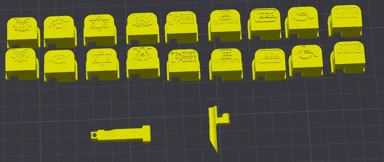
The Turkish Glock switch designs circulating on LBRY represent a fascinating intersection of 3D printing technology and the eternal cat-and-mouse game between regulators and innovators in the firearms space. What makes these particular designs noteworthy isn’t just their origin from a country with a historically robust firearms manufacturing sector, but how they’ve been optimized for the Glock platform—the most ubiquitous handgun in America. The creator’s approach suggests a deep understanding of both the mechanical requirements for reliable auto-sear function and the practical constraints of consumer-grade 3D printing, creating something that bridges the gap between garage tinkerer and serious engineering challenge.
For the 2A community, these designs underscore a fundamental truth that gun control advocates consistently underestimate: the democratization of manufacturing technology means that regulatory barriers become increasingly porous with each advancement in desktop fabrication. When a Turkish designer can share functional auto-sear files that work with America’s most common handgun platform, it illustrates how the regulatory state’s traditional tools—import restrictions, manufacturing licensing, and distribution controls—face obsolescence in an era where the means of production can fit on a kitchen table. The LBRY tags themselves tell the story: 3d2a isn’t just shorthand for 3D-printed firearms, it’s a declaration that the Second Amendment’s protections extend to the digital realm where information wants to be free.
What’s particularly clever about this development is how it forces a reckoning with the practical limits of gun control in the 21st century. While politicians debate assault weapon bans and magazine capacity restrictions, the underlying technology for converting semi-automatic firearms to fully automatic operation has become trivially reproducible by anyone with a $200 printer and basic technical aptitude. This isn’t about advocating for illegal modifications—it’s about recognizing that the policy debate around firearms has been fundamentally altered by technologies that make prohibition-based approaches increasingly untenable, pushing the conversation toward enforcement realities rather than legislative fantasies.


