

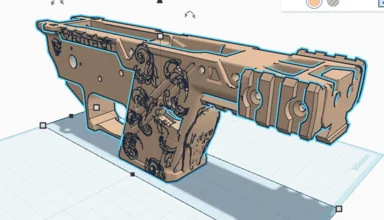
The DB Alloy lower receiver has been quietly turning heads in the AR-15 world, and the latest “pimped out” iteration proves why. Machined from a high-grade aluminum alloy that’s been heat-treated for extra toughness, this lower sheds unnecessary weight without sacrificing the rigidity shooters demand when the rifle is pushed hard on the range or in competition. What sets it apart is the attention to detail—flush-fit trigger guard, integrated tensioning system, and a surface treatment that resists both corrosion and the inevitable dings of hard use. In short, it’s the kind of foundational component that lets builders focus on the fun stuff—optic choice, barrel profile, muzzle device—while knowing the serialized heart of the gun is already sorted.
For the 2A community, the significance runs deeper than aesthetics. Every time a small manufacturer refines a mil-spec part and brings it to market at a competitive price, it chips away at the notion that only big defense contractors can deliver quality. That decentralization of production is exactly what the founders had in mind when they wrote the Second Amendment: an armed populace whose tools of liberty aren’t controlled by a single arsenal or a single point of failure. Builders who choose the DB Alloy lower aren’t just assembling a rifle; they’re participating in a distributed network of American innovation that keeps rights exercised and skills sharp.
Looking ahead, expect more “alloy vs. polymer vs. billet” debates as material science continues to trickle down from aerospace labs to garage workbenches. Each new option that passes rigorous drop-safety and function testing expands the menu for responsible owners, reinforcing the principle that an accessory or component is just that—an accessory—until government tries to redefine it as a firearm. The DB Alloy lower, in all its tricked-out glory, is a reminder that freedom is often maintained one well-machined part at a time.


