

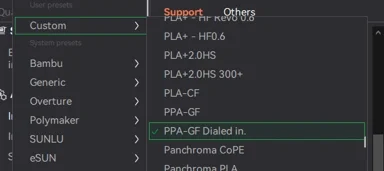
The Bambu Lab P1S, already a workhorse in the maker community, just got a serious upgrade in the hands of someone who refused to let budget define capability. Coming from a CR-10S background, this builder didn’t simply migrate workflows—they reverse-engineered the entire print chain, layering custom G-code, high-flow hotend tweaks, and material-specific tuning into a preset library that others can now import and run. The result is a set of profiles that push the P1S into territory usually reserved for far more expensive machines, all while staying firmly in the “maker on a mission” lane rather than the “corporate R&D budget” lane.
What makes this drop significant for the 2A community is how directly it lowers the barrier to entry for producing mission-critical components—mag wells, lower receivers, training aids, and replacement hardware—without requiring six-figure shop infrastructure. When a builder who started on a $300 printer can publish settings that let others achieve repeatable, high-strength prints on a sub-$2k machine, the entire ecosystem shifts. It’s not just about faster print times or prettier top layers; it’s about shrinking the distance between idea and functional part, which matters when supply chains tighten or when the next regulatory surprise lands.
The deeper implication is cultural. This isn’t a closed-source white paper from a defense contractor; it’s an open-source handoff from one builder to the next, complete with the engineering notes that usually stay locked behind NDAs. That pattern—iterate, document, release—has always been the 2A community’s quiet advantage. Every new preset that survives real-world testing and gets shared is another node in a distributed manufacturing network that no single point of failure can shut down.


