

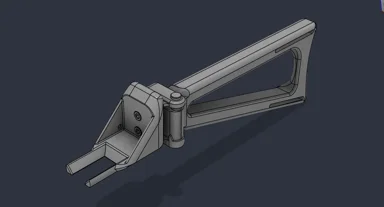
The Cugir Draco side-folder brace project represents a fascinating evolution in the 3D-printed firearms accessory space, where community-driven innovation continues to push the boundaries of what’s possible with desktop manufacturing. This particular design stands out for its pragmatic approach to compatibility—using prongs rather than a full base plate ensures it interfaces with virtually any AK grip pattern, not just the 80% that would work with a traditional mounting solution. The creator’s methodical release strategy, starting with STEP files for verification before moving to more accessible 3MF and STL formats, demonstrates the kind of responsible development practices that strengthen the entire 3D2A ecosystem.
What’s particularly compelling about this project is how it addresses the real-world needs of Draco owners who want to maintain the compact profile of their side-folding stock while adding the stability and legal compliance that a brace provides. The fact that this is being developed openly, with hardware presets already integrated into the STEP file, suggests we’re seeing the maturation of the guncad community—moving beyond simple proof-of-concept designs toward production-ready solutions that account for the complexities of real firearms interfaces. This kind of work doesn’t just benefit individual builders; it creates a knowledge base that strengthens the entire community’s ability to adapt and innovate around increasingly restrictive regulations.
For the broader 2A community, projects like this underscore why the right to keep and bear arms must include the right to manufacture and modify—especially when commercial options may be limited by import restrictions, regulatory changes, or simple market gaps. The Draco platform, already popular for its compact size and robust construction, becomes even more versatile when paired with community-developed accessories that address specific use cases. As 3D printing technology continues to advance and the regulatory landscape evolves, these grassroots engineering efforts serve as both practical solutions and powerful demonstrations of why decentralized manufacturing capability remains essential to preserving Second Amendment rights in the digital age.


