

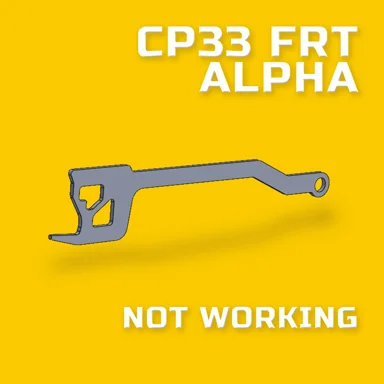
The CP33, CMR30, and PMR30 community just got handed an unfinished but tantalizing piece of the forced-reset puzzle—an open-source trigger bar design that promises to turn Kel-Tec’s already zippy .22 LR pistols into something closer to a binary or FRT experience. The creator’s frustration is palpable: months of outreach to commercial partners yielded nothing, a hand-off to another developer went cold, and the only working prototypes have managed a couple of stutter-fire rounds before the bolt binds against the trigger bar. That friction problem is the classic 3D2A engineering bottleneck—polymer can’t take the cyclic abuse, metal prints are still exotic for most hobbyists, and the geometry has to thread the needle between reliable reset and bolt clearance under the CP33’s already light recoil spring.
What makes this drop interesting isn’t just the hardware; it’s the timing and the philosophy. A commercial FRT-style option has already surfaced on video, proving market demand exists, yet the open-source route remains stalled at the alpha stage. That tension highlights how 2A innovation often splits between two paths: one that chases ATF letters and retail margins, the other that throws files into the “ether” hoping the community stress-tests, iterates, and ultimately ships working steel. If someone cracks the spring-preload or geometry fix the original designer sketched, the payoff could be huge—legal, semi-auto-only forced reset on three popular Kel-Tec platforms without waiting for another boutique manufacturer to navigate the regulatory maze.
For the broader pro-2A ecosystem this is another reminder that rights are preserved by people who refuse to treat stagnation as acceptable. Whether the eventual solution arrives via a garage CNC, a metal 3D printer, or a surprise collab with the very companies that ghosted the project, the files are now public. That alone shifts the Overton window: the technology exists, the demand is documented, and the only remaining variable is how quickly the community turns an almost-working trigger bar into a reliable, shareable product.


