

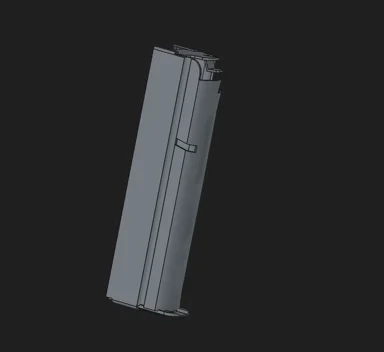
The Auto-Ordnance 9mm magazine project that just surfaced on LBRY is a perfect snapshot of where the 3D-printing arms race is headed: a lone maker posting a single, spring-less mag file with the blunt admission that he “couldn’t figure out how to model the spring in FreeCAD.” That tiny admission is the real story. It tells us the hardware barrier is no longer the polymer frame or feed lips—those are solved problems—but the coiled, high-cycle component that has to survive thousands of violent compressions without taking a set. In other words, the community has reached the point where the next bottleneck is materials science, not geometry files.
What makes this interesting for the broader 2A ecosystem is how quickly that bottleneck is being crowdsourced. Within hours of the upload, comments were already swapping notes on music-wire substitutes, SLA-printed mandrels for winding, and even embedding captured commercial springs inside printed bodies. Each iteration shrinks the distance between a hobbyist’s bench and a finished, reliable 9×19 1911 magazine. That matters because magazines are the new controlled item in several states; if the spring problem is solved in public, the regulatory target moves from “buy a mag” to “own a spool of wire and a printer,” a much harder thing to police.
The deeper implication is cultural. A few years ago, posting an unfinished mag file would have been dismissed as vaporware; today it’s treated as an open ticket that dozens of makers will stamp “in progress.” That shift from scarcity thinking to abundance thinking is exactly why gun-control measures keyed to finished products keep arriving stillborn. The Auto-Ordnance 9mm mag may still need its spring, but the network that will eventually supply it is already fully assembled—and it isn’t asking permission.


