

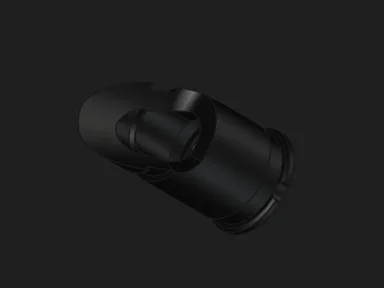
The AKM slant brake has long been one of the most recognizable silhouettes in the firearms world, and now it’s available as a fully reverse-engineered 3D-printable reference model under a CC-BY license. What makes this release noteworthy isn’t just the geometry—though the model is faithful enough to serve as a drop-in visual or functional stand-in—but the fact that it’s explicitly framed as a reference rather than a finished part. The designer’s note that PA6-GF25 filament is technically viable yet metal machining is preferred signals a mature understanding of material limits: the community is being handed a high-fidelity starting point, not a plug-and-play consumable. That distinction matters in an ecosystem where regulators and manufacturers alike are still sorting out where “reference” ends and “manufacture” begins.
For the 2A community, this model is another brick in the growing wall of decentralized design knowledge. Because the file is licensed CC-BY, anyone can study, modify, or redistribute it without legal friction, accelerating both hobbyist experimentation and the broader conversation about what constitutes a regulated component. At the same time, the explicit nod toward metal machining keeps the discussion grounded; it reminds users that while additive manufacturing has lowered the barrier to entry, material science and regulatory definitions have not vanished. The result is a quiet but powerful form of knowledge transfer: the slant brake’s iconic shape is no longer locked behind OEM drawings or import paperwork; it’s now a shared data set that enthusiasts can iterate upon, critique, or simply admire.
In practical terms, the release also highlights how far the community has come in separating form from function. A printable slant brake can serve as a thread protector, a visual reference for custom builds, or even a low-stress training aid—none of which require the part to survive full-auto abuse. By publishing the model with clear material caveats, the designer is modeling responsible disclosure: the file is out there, the limitations are stated, and the end user is trusted to decide how (or whether) to turn reference into reality. That trust-based approach is becoming the norm rather than the exception, and it’s reshaping how the 2A world thinks about design ownership, safety margins, and the future of home gunsmithing.


