

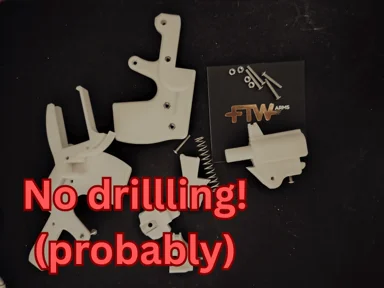
The 5/16-inch modified Shizukana barrel is more than a simple parts upgrade; it’s a quiet but decisive step toward making the FTW Arms kit truly “drop-in” for builders who want to avoid the old ritual of drilling, shimming, and jury-rigging. By enlarging the bore to accept modern barrel liners and extending the shoulder so the shorter recoil spring seats correctly, the design removes two of the most common friction points that once separated a finished receiver from a functioning firearm. In practical terms, that means fewer tools on the bench, fewer opportunities for rookie mistakes, and—most importantly—fewer excuses for regulators who like to claim that 3-D-printed guns are too fiddly or unreliable to matter.
What makes the move noteworthy is how deliberately it sidesteps the usual regulatory tripwires. Rather than hawking an entire weapon, the file set and the barrel spec are offered as incremental improvements to an existing, publicly available kit. That keeps the project squarely inside the protected space of technical data under the First Amendment while still delivering a measurable performance gain. The community’s reaction has been characteristically pragmatic: builders are already posting function-test videos that show reliable lock-back on empty and clean feeding with common 9 mm blow-back loads. Those clips serve as living proof that the Second Amendment isn’t just about paper rights; it’s about the practical ability to assemble, maintain, and—if necessary—defend with arms that don’t require a Federal Firearms Licensee’s blessing at every step.
Longer term, the Shizukana barrel tweak signals where the 3-D printing arms race is headed: away from garage novelty and toward standardized, user-serviceable components that compete directly with legacy OEMs on reliability and cost. As more builders adopt the 5/16 standard, aftermarket suppliers will have a ready market for improved liners, optic mounts, and even suppressor adapters. That ecosystem effect is exactly what scares gun-control advocates most, because it demonstrates that the right to keep and bear arms scales with technology instead of shrinking under it. In short, this small barrel change is another brick in an expanding wall of distributed manufacturing—one that makes the 2-A community harder to regulate, easier to supply, and increasingly confident that the future of firearms will be written in plastic filament and open-source files rather than in Washington conference rooms.


