

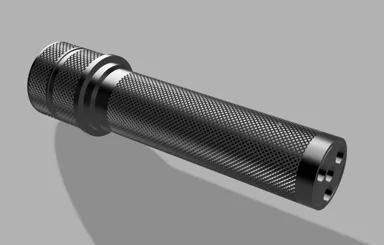
The PBS-1 9 mm suppressor project is a textbook example of how the Form 1 community is quietly rewriting the rules of what a “budget” can can be. By stuffing proven FTN-5 baffles into a cosmetic outer tube, the designer has essentially created a drop-in, 9 mm-rated core that rides inside whatever 1.375×24 mount or tube the end-user already owns. That’s not just parts-bin engineering; it’s a deliberate middle finger to the notion that you must pay four-digit prices for a suppressor that actually works. The fact that the whole affair is labeled “3DS-1” and comes with an explicit warning against 7.62×39 use shows a level of user discipline that regulators claim doesn’t exist in the home-build world.
What makes this release culturally significant is how little drama it generated. No crowd-funding campaign, no vaporware renders, just a readme and a file set that anyone with a printer and a Form 1 stamp can turn into a functioning 9 mm can in an afternoon. That speed-to-function pipeline is exactly why the pistol-caliber carbine market exploded after the ATF’s pistol-brace rule: once the ergonomics were settled, the only remaining bottleneck was sound moderation, and now even that gate is creaking. The PBS-1 files won’t bankrupt SilencerCo, but they do illustrate that the technological moat around moderate-performance silencers is now measured in gigabytes rather than patents.
For the broader Second Amendment community, the takeaway is straightforward: the tooling gap between “I wish I had a suppressor” and “I just printed and Form-1’d one” is narrowing every month. Lawmakers banking on scarcity or complexity to justify further gatekeeping are running out of factual ground. The PBS-1 may be an untested garage project today, but its underlying message—that quality sound moderation is an information problem, not solely a manufacturing one—is already impossible to un-ring.


