

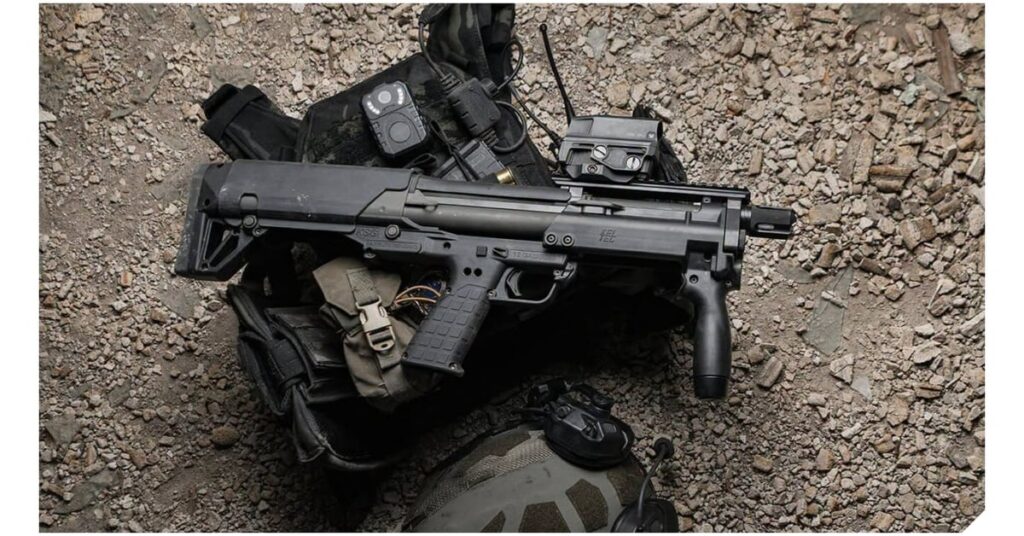
South Korea’s Coast Guard just doubled down on the KelTec KSG, ordering another batch of the 14-round, bullpup 12-gauge that looks more like a sci-fi prop than a patrol weapon. The decision is telling: a maritime agency that routinely boards vessels in contested waters wants a compact, high-capacity shotgun that can be maneuvered through tight companionways yet still deliver overwhelming firepower when needed. KelTec’s choice to keep the KSG in production—despite its unconventional ergonomics—has been vindicated by real-world operators who value magazine-tube capacity over tradition.
For the 2A community, the story is a quiet reminder that the right to keep and bear arms isn’t just a domestic talking point; it’s an export product. When a foreign government voluntarily arms its agents with an American-made, semi-auto bullpup shotgun, it undercuts the narrative that such firearms are too “military” for civilians. The KSG’s civilian-legal configuration—same 18.5-inch barrel, same 14+1 capacity—remains on the shelf for any law-abiding American who wants the same tool the South Korean Coast Guard trusts. That overlap between professional and private use is exactly what the Founders envisioned when they protected “arms,” not “hunting rifles.”
The larger implication is strategic. Every time a free-world agency chooses an innovative U.S. design over legacy European platforms, it strengthens the domestic industrial base that keeps civilian innovation alive. KelTec’s willingness to iterate on the KSG—lighter fore-ends, improved downward ejection, optic-ready receivers—shows how 2A-protected entrepreneurship feeds both law-enforcement and private-sector progress. In short, South Korea’s repeat order isn’t just a procurement footnote; it’s evidence that the Second Amendment still fuels the kind of practical ingenuity the rest of the world wants to buy.


