

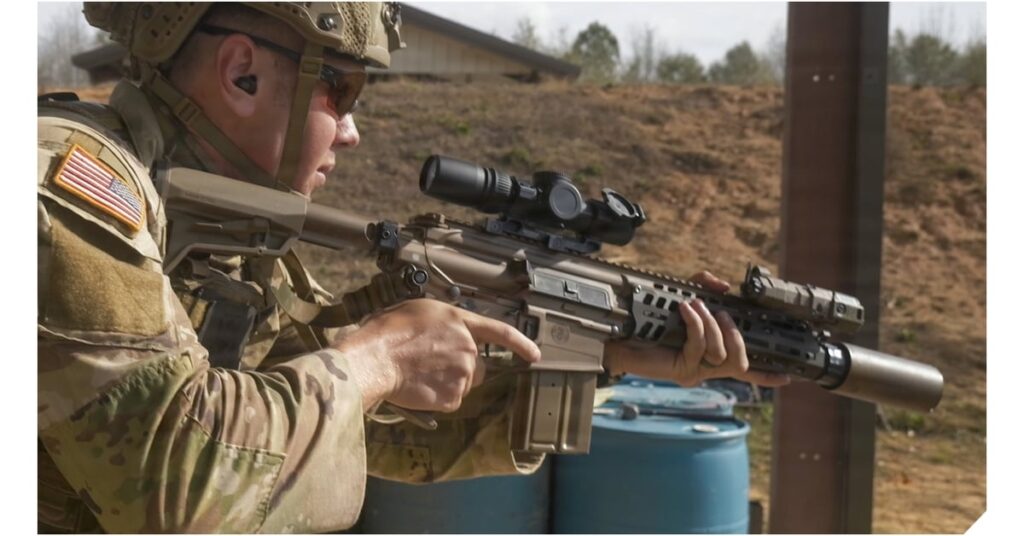
The Pentagon’s decision to pivot funding from the M7 rifle toward the XM8 carbine in its FY27 request isn’t just another line-item shuffle—it’s a tacit admission that the 6.8×51 cartridge and its heavy, piston-driven platform may be too much gun for the close-quarters realities of tomorrow’s fights. By quietly redirecting dollars to a lighter, more modular 5.56-based carbine, the Army is signaling that the “bigger is better” philosophy baked into the Next Generation Squad Weapon program is running into the same wall every infantryman has known since Vietnam: weight, ammo burden, and the brutal tyranny of the ruck. For the 2A community this matters because the same industrial base that produces the civilian-legal M7/M4 clones will now have fresh incentive to spin off even more compact, optics-ready 5.56 rifles that respect both the laws of physics and the Second Amendment.
At the same time, the move exposes how fragile top-down caliber mandates can be when budgets and battlefield feedback collide. SIG’s 6.8 hybrid round was sold as a revolutionary leap, yet the XM8’s reappearance suggests the service still wants an intermediate cartridge that doesn’t punish the average soldier with 140-round combat loads. That tension is instructive for civilians: if the military—flush with data and funding—can’t settle on a single “perfect” round, then arbitrary state restrictions on “assault weapons” or magazine capacity look even more detached from real-world terminal performance. The 2A takeaway is straightforward: the right to keep and bear arms is healthiest when the market, not a single procurement document, decides which tools best balance power, weight, and shootability.
Finally, the budget maneuver underscores how quickly today’s “legacy” platforms can become tomorrow’s export or civilian darlings. Should the XM8 carbine gain renewed traction inside the force, its ergonomic DNA will almost certainly migrate into the aftermarket, giving private citizens access to lighter, more reliable 5.56 rifles at a time when some states are still trying to ban the very features that make those guns effective. In short, the Army’s quiet course correction is another reminder that innovation in small arms rarely travels in a straight line—and that an armed citizenry benefits when that innovation remains decentralized, competitive, and constitutionally protected.


