

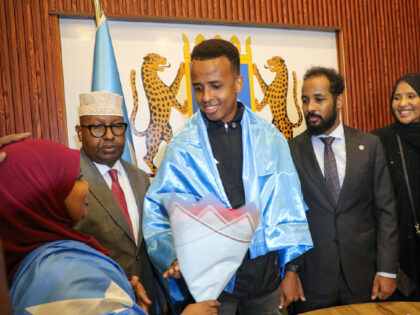
In a move that underscores the razor-thin line between international sporting events and national security, U.S. Customs and Border Protection turned away a Somali World Cup referee whose name reportedly surfaced on terror-watch lists linked to al-Shabaab. While the referee’s blocked entry made headlines for its soccer-world drama, the deeper story is how porous borders and lax vetting continue to test the very systems meant to keep Americans safe—systems that the Second Amendment was designed to backstop when government fails. The fact that a figure cleared for FIFA’s global stage could still trigger alarms at our own ports of entry reveals how little control we truly exercise over who crosses our thresholds, and why millions of citizens view the right to keep and bear arms not as a hobby, but as the final insurance policy against threats both foreign and domestic.
For the 2A community, this episode is less about soccer and more about the recurring pattern: officials discover a terrorism nexus only after an individual is already in motion toward U.S. soil. That discovery often arrives too late for legislative remedies or bureaucratic fixes, leaving law-abiding gun owners to confront the downstream consequences—soft-target attacks, strained law-enforcement resources, and the quiet acknowledgment that “see something, say something” ultimately rests on an armed citizenry ready to act. The referee story also spotlights the selective outrage in media coverage; when immigration or refugee policies intersect with terrorism risks, discussion of armed self-defense is usually dismissed as paranoia—until the next preventable incident forces the conversation back into the open.
Ultimately, the blocked referee is a single data point in a larger ledger that tracks how sovereignty, security, and the Bill of Rights remain intertwined. As long as entry protocols lag behind the threat matrix, the individual right to effective self-defense will continue to serve as the constitutional pressure-release valve the Founders intended. The 2A community doesn’t need soccer headlines to validate that stance; they simply need policymakers to remember that every failure of upstream security lands, by design, on the shoulders of citizens prepared to finish the job.


