

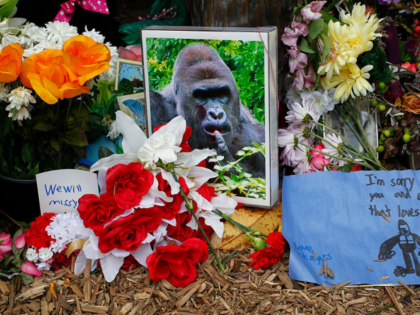
The White House’s decision to mark the tenth anniversary of Harambe’s death with an official statement is a textbook case of selective institutional memory: a 400-pound silverback is lionized while the very tool that ended a potential tragedy—the lawfully owned firearm—is treated as an afterthought. In 2016 the Cincinnati Zoo’s quick-thinking staff used a single, precisely placed shot to neutralize an immediate lethal threat to a three-year-old child; that shot was fired from a department-issued rifle whose legality and necessity no serious observer questioned at the time. Ten years later, the same federal apparatus that once quietly relied on that capability now elevates the animal’s memory above any acknowledgment of the armed responder who made the split-second call, revealing how far the Overton window on lawful self-defense has drifted.
For the 2A community the episode is a quiet warning about narrative control. When an institution as powerful as the White House can retroactively frame a defensive shooting as a somber wildlife memorial without mentioning the firearm or the legal framework that allowed its use, it signals an environment in which the right to keep and bear arms is being memory-holed in real time. The same logic that elevates Harambe while erasing the rifle could, in another context, portray a homeowner’s defensive shot or a police officer’s justified use of force as regrettable rather than rightful. Pro-2A citizens should treat this as a cultural data point: if even a clear-cut case of protecting a child can be spun into a gorilla elegy, then every future defensive gun use will face an uphill battle for honest framing.
The practical takeaway is straightforward—continued vigilance in both law and culture. Shall-issue carry, constitutional carry expansions, and the protection of defensive-gun-use statutes remain essential precisely because institutional storytellers are already rehearsing the language that could criminalize or delegitimize them. The Harambe commemoration is not about a long-dead primate; it is a small but telling illustration of how the right to effective self-defense can be obscured by sentiment and selective remembrance if those who value it do not actively push back.


