

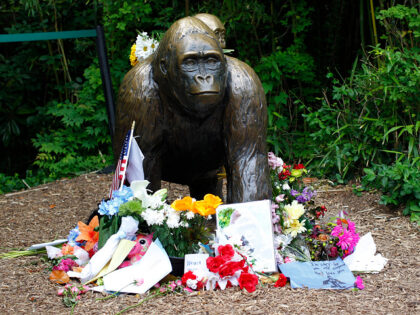
In a move that feels equal parts tribute and political theater, the White House’s decision to posthumously celebrate Harambe as a “true patriot” lands like a carefully staged photo-op in an election year. Ten years after the Cincinnati Zoo tragedy, the administration is reframing the 450-pound silverback not as a casualty of a parent’s lapse in supervision, but as a symbol of American resilience—complete with the kind of solemn language usually reserved for Medal of Honor recipients. The optics are unmistakable: by elevating an animal whose death once sparked global outrage into a national icon, officials are signaling that even the most chaotic moments can be retrofitted into narratives of strength and sacrifice.
For the 2A community, the subtext is harder to miss. The same institutions that spent years pushing “commonsense” restrictions on defensive firearms are now lionizing a creature whose very presence in a zoo enclosure underscored the limits of controlled environments and the necessity of personal responsibility. Harambe didn’t have a Glock or a 1911; he had teeth, muscle, and the raw calculus of survival. The child’s fall into that enclosure was a textbook failure of adult oversight, not a failure of the animal’s nature. Celebrating the gorilla while simultaneously demonizing law-abiding citizens who carry the modern equivalent of that same defensive capability reveals a selective reverence for strength—acceptable when it’s safely behind glass, unacceptable when it’s holstered on a citizen’s hip.
The longer-term implication is a quiet but pointed reminder that rights and responsibilities travel together. Just as the zoo’s barriers existed to protect both species, the Second Amendment exists to let individuals maintain their own perimeter when institutions cannot or will not. By turning Harambe into a patriotic mascot, the White House may have inadvertently highlighted why millions of Americans refuse to outsource their security to fences, policies, or the goodwill of strangers. In the end, the story isn’t really about a gorilla; it’s about who gets to decide what counts as legitimate self-preservation—and why the answer has always been the individual, not the enclosure.


