

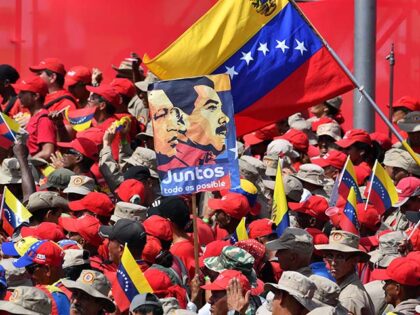
The White House’s release of the CIA assessment on Venezuela’s socialist regime is a stark reminder that once a government seizes control of the ballot box, every other right—including the right to keep and bear arms—becomes negotiable. By digitally manipulating vote tallies under Chávez and Maduro, Caracas turned elections into theater, proving that when the administrative state owns the counting machines, “democracy” is just another lever of centralized power. For Second Amendment advocates, the lesson is immediate: the same ideological forces that dismantled Venezuela’s electoral integrity are the ones that now push for universal background checks, red-flag laws, and “assault-weapon” bans here at home; each policy is sold as public safety but functions as another data point in a growing registry of who owns what.
What makes the Venezuelan case especially instructive is how quickly the loss of electoral accountability translated into the physical disarmament of the population. Once opposition parties were frozen out of power, the regime moved from vote-rigging to gun-confiscation decrees, leaving citizens defenseless against both state repression and the criminal gangs that filled the vacuum. The parallel to current U.S. debates is impossible to ignore: every new restriction on lawful ownership is framed as incremental and reasonable, yet each one incrementally shifts the balance of force toward the state—the same state whose agencies have now documented how socialists elsewhere used technology to nullify the people’s voice.
For the 2A community, the takeaway is strategic rather than partisan. Venezuela demonstrates that paper guarantees are only as strong as the mechanisms that enforce them; when those mechanisms are captured, rights evaporate regardless of what the constitution says. That is why vigilance over election integrity, resistance to digital-ID voting schemes, and an uncompromising defense of private firearm ownership are not separate causes—they are interlocking safeguards against the same authoritarian impulse. The CIA report is not merely foreign-policy trivia; it is a case study in why an armed, informed citizenry remains the ultimate check on any regime tempted to count its own votes.


