

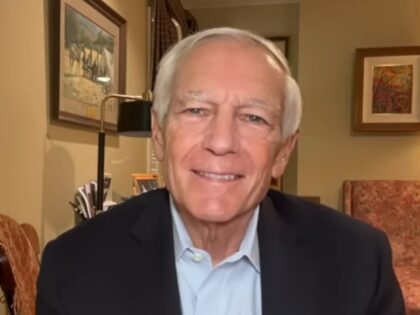
Wesley Clark’s blunt assessment that Iran’s only real leverage in the Strait of Hormuz is forcing the United States to hesitate by striking our allies and forward bases should ring alarm bells for every gun owner who understands how quickly regional crises can cascade into global ones. The retired general is essentially admitting that Tehran’s strategy hinges on deterrence through proxy pain rather than conventional naval power, a calculation that leaves the U.S. Navy’s carrier groups and the free flow of energy vulnerable to political second-guessing in Washington. For the 2A community this is a reminder that the same political class reluctant to project strength abroad is often the same one eager to restrict the tools citizens rely on for self-defense at home; when deterrence fails overseas, the domestic appetite for gun control tends to rise under the banner of “public safety.”
The deeper implication is that energy chokepoints like Hormuz are not abstract foreign-policy problems; they are the fuse that can ignite shortages, inflation, and civil unrest here at home, conditions historically exploited to justify new restrictions on lawful firearm ownership. Clark’s point that Iran must “get us to not finish” by hitting targets we value underscores how fragile extended deterrence has become when political will is the limiting factor, not hardware. Responsible gun owners who stockpile ammunition and train with modern semi-automatic rifles are not preparing for some abstract doomsday scenario; they are hedging against the very instability that follows when adversaries correctly read American hesitation.
In short, Clark’s warning is less about Iranian naval tactics and more about the recurring pattern that weakness abroad invites pressure that eventually lands on the Second Amendment at home. The 2A community’s best response is to stay informed, stay armed, and reject the notion that our security can be outsourced to politicians who treat both foreign adversaries and domestic gun owners as problems to be managed rather than threats to be deterred.


