

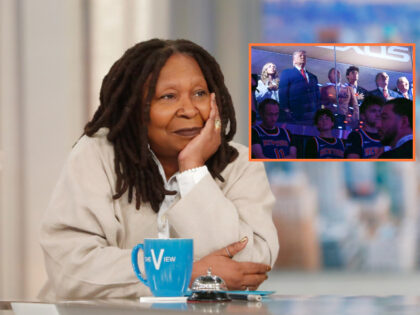
Whoopi Goldberg’s defense of President Trump showing up at Madison Square Garden for Game 3 of the NBA Finals isn’t just a media moment—it’s a reminder that even in the most polarized corners of pop culture, the right to move freely and enjoy public life still matters. When the former View co-host pushed back against the predictable outrage, she was essentially acknowledging that a sitting president, like any other citizen, shouldn’t be barred from a basketball arena because of political fashion. For the 2A community, that principle scales directly to the right to keep and bear arms: if the same standard applied, law-abiding gun owners could be told they’re unwelcome at ranges, gun shows, or hunting grounds simply because activists dislike their politics or their choice of self-defense tool.
The deeper implication is that selective exclusion based on viewpoint is a gateway tactic. Today it’s “Trump shouldn’t watch the Knicks”; tomorrow the same logic is used to argue that gun owners shouldn’t be allowed near schools, parks, or sporting events. The Knicks-Spurs game itself was incidental—the real contest was over whether public spaces remain open to everyone or become ideological fiefdoms. Goldberg’s pushback, however brief, undercuts the narrative that certain Americans must be quarantined from normal life, and that undercuts the same reasoning gun-control advocates use when they push for “sensitive places” restrictions that keep growing until the Second Amendment exists only on paper.
For pro-2A readers, the takeaway is strategic: every time cultural figures refuse to play along with cancel-first instincts, it weakens the broader effort to normalize exclusion. Supporting the principle that a president can attend a game without being shouted down is the same muscle that defends the right of a concealed-carry holder to enter a courthouse lobby or a gun owner to keep a rifle in the truck on public land. The arena may have been Madison Square Garden, but the battlefield is consistency—either rights apply across the board or they become privileges doled out by whoever holds the microphone.


