

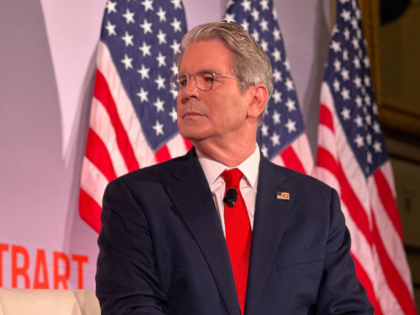
Treasury Secretary Scott Bessent’s appearance at the White House podium on May 28 wasn’t just another fiscal update—it was a signal that the administration intends to keep the regulatory spigot wide open on financial surveillance tools that have already been weaponized against gun owners. When a Treasury chief steps in front of the cameras to tout “modernizing” Bank Secrecy Act reporting thresholds and expanding access to real-time transaction data, the 2A community should hear the subtext loud and clear: every FFL swipe, every online ammo purchase, and every gun-show cash transaction is one more data point feeding a permanent federal dossier. Bessent’s calm assurances about “targeted enforcement” ring hollow when the same infrastructure that flagged parents at school boards can just as easily tag anyone whose spending pattern deviates from the coastal urban mean.
The deeper play here is the quiet fusion of financial regulators with the ATF’s eTrace system and the CFPB’s newly aggressive stance on “high-risk” merchants. By lowering the currency transaction threshold and pushing banks to adopt AI-driven “suspicious activity” algorithms, the Treasury is effectively crowdsourcing gun-owner surveillance to private institutions that face existential regulatory risk if they fail to play along. That means a single misinterpreted Venmo payment for a holster or an above-average number of range visits charged to a credit card could trigger an SAR that lands in a joint ATF-FBI fusion center—without the gun owner ever knowing. For an administration that claims to champion deregulation, this is deregulation in name only; the heavy hand has simply moved from the statute books to the compliance departments of every bank and payment processor in the country.
The takeaway for Second Amendment supporters is that the next battlefront isn’t another pistol brace rule—it’s the plumbing of the financial system itself. Every time a Treasury official normalizes “visibility” into firearms-related commerce, the practical effect is to make cash, privacy coins, and privacy-respecting banks the only remaining firewalls between lawful owners and a de-facto registry. The 2A community needs to treat financial surveillance with the same urgency once reserved for magazine bans, because a world where every transaction is pre-cleared by an algorithm is a world where the right to keep and bear arms exists only until the next model update.


